
Funchal is bigger and more interesting than most visitors expect. With a population of 110,000, it's a genuine city — not a resort or a village dressed up for tourists. The old town has been inhabited continuously since the 15th century. The market is one of the great covered markets of the Atlantic. The botanical garden sits at the intersection of Portuguese colonial history and extraordinary natural beauty. And the food and drinking scene is quietly excellent. This is what to do here, starting with the things that actually matter.
💡 Tip: Quick Answer: Top things to do in Funchal — Zona Velha painted doors walk, Mercado dos Lavradores, Monte Palace Gardens + cable car, CR7 Museum, Botanical Garden, and poncha at a traditional bar in the old town.
**Quick Answer:** The top things to do in Funchal are: ride the **cable car to Monte**, explore the **Zona Velha** painted doors, visit **Monte Palace Gardens**, shop at **Mercado dos Lavradores**, and end the evening with poncha in the Old Town. Allow 2 full days to do it justice.
Table of Contents
- Top 15 Things to Do
- Old Town — Zona Velha
- Mercado dos Lavradores
- Monte Palace Tropical Gardens
- Cable Car & Monte Toboggan
- CR7 Museum
- Botanical Garden
- Poncha Bars & Nightlife
- Day Trips from Funchal
- FAQ
Top 15 Things to Do in Funchal
- Walk the Zona Velha painted doors street
- Explore Mercado dos Lavradores — try the tropical fruit
- Take the cable car to Monte
- Ride the Monte toboggan down
- Visit Monte Palace Tropical Garden
- See the CR7 Museum
- Walk the Botanical Garden (Jardim Botânico)
- Taste authentic Madeiran food at a tasca
- Drink poncha at a traditional bar
- Explore the Se Cathedral and old town squares
- Visit the MUDAS contemporary art museum
- Take a whale watching boat trip from the marina
- Funchal harbour sunset walk
- Day trip to Câmara de Lobos (20 min west)
- Day trip to Cabo Girão (30 min west)
Old Town — Zona Velha
The Zona Velha (Old Zone) is Funchal's most atmospheric neighbourhood — the original settlement area built by the island's first settlers in the 15th century. The streets are cobblestone, the buildings are low and colourful, and the area has been beautifully regenerated over the last decade without losing its authenticity.
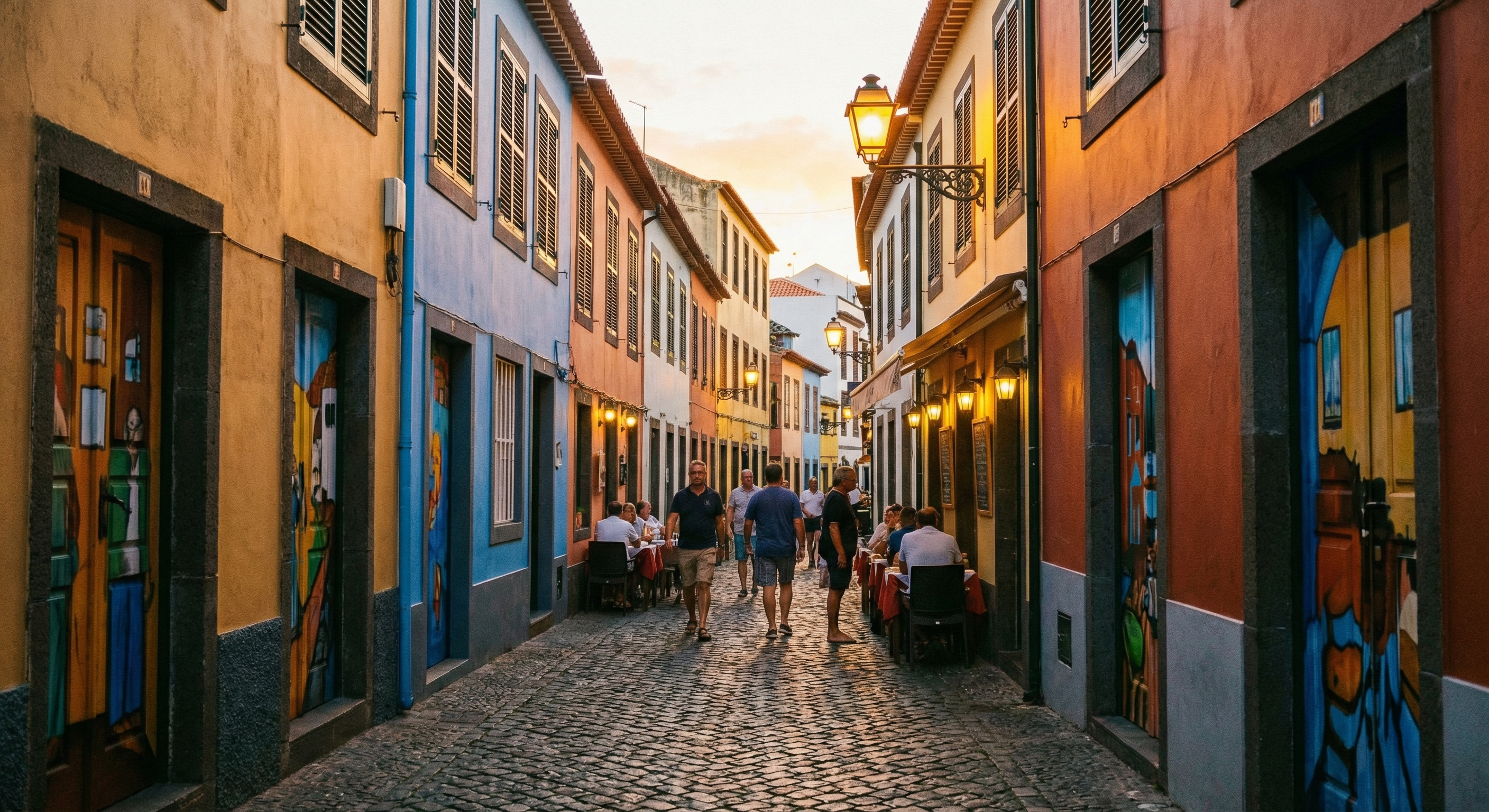
The Zona Velha's famous painted door project began in 2011 — local and international artists transformed 200 doorways into an open-air gallery. At dusk, the cobblestone streets fill with the smell of grilling fish, the sound of live fado, and the soft light of lanterns. This is Funchal at its best.
The neighbourhood's most famous feature is the Painted Doors Project (Portas Abertas) — a public art initiative where Funchal's Zona Velha doors have been painted by local and international artists. The effect is a street gallery you wander through as you explore — some doors are simple and decorative, others are complex narrative murals. Rua de Santa Maria is the main street, and every door is different.
The Zona Velha is also the best area for restaurants and bars — particularly poncha bars, traditional tascas, and late-night music spots. Start here in the evening and work your way south toward the harbour.
Mercado dos Lavradores
Madeira's central covered market is one of the great Atlantic markets — a Art Deco building from the 1930s packed with stalls selling everything the island produces. The ground floor is split between flower sellers (the women in traditional Madeiran costume who sell bird-of-paradise flowers and orchids), fruit stalls with species you've never encountered (anona, maracujá, pitanga, sapota), and the famous fish hall below.
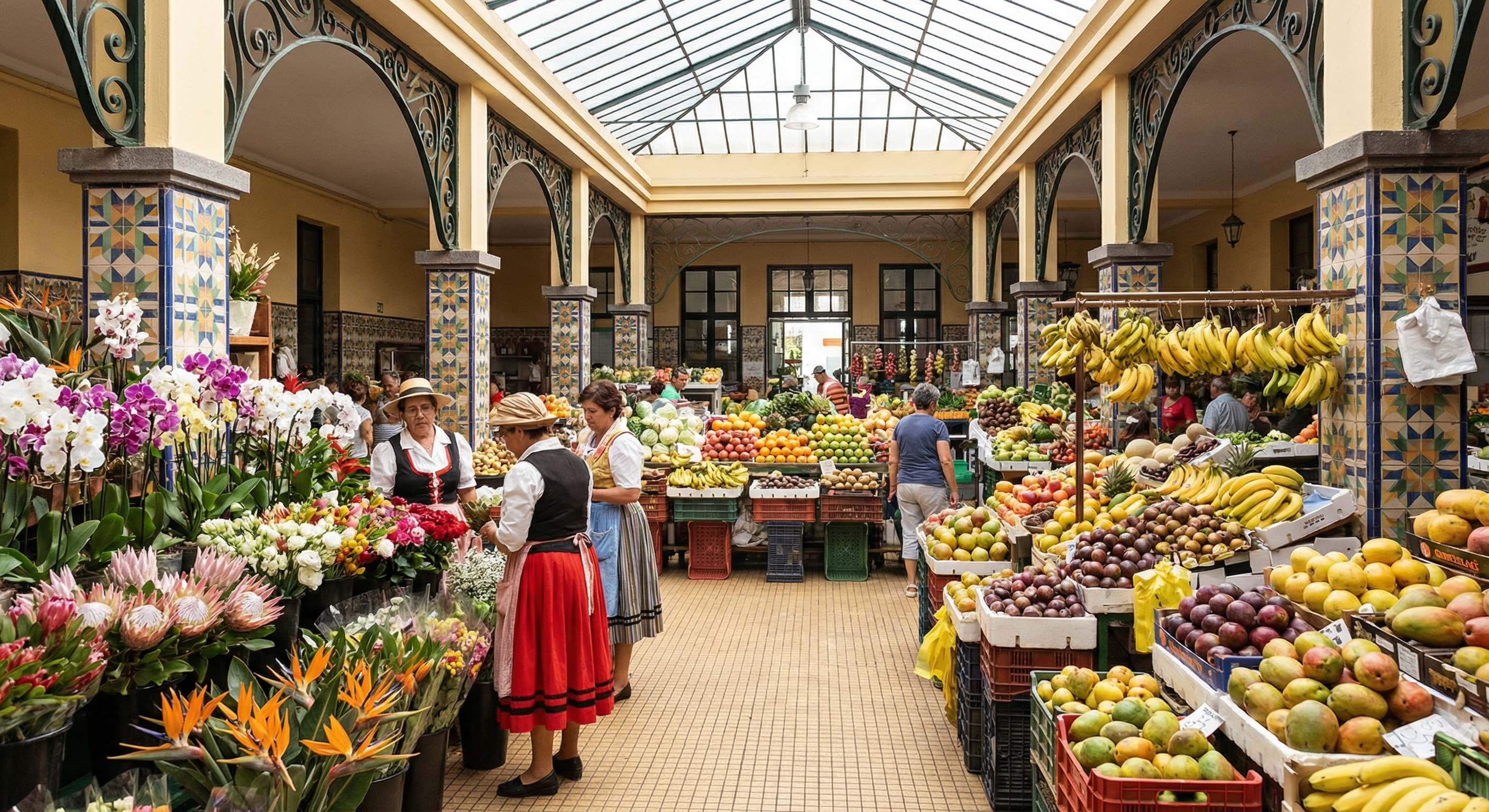
Built in 1940 in the Estado Novo architectural style, the Mercado dos Lavradores is Funchal's most atmospheric space. The flower sellers in traditional Madeiran dress occupy the entrance hall; the fish stalls downstairs show off espada, grouper, and tuna just caught that morning. Go before noon.
The fish hall — reached by a staircase at the back of the building — is where you'll find espada (black scabbardfish), freshly-caught Atlantic tuna, grouper, and the full range of what Madeiran fishermen bring in each morning. It's one of the best fish markets in the North Atlantic and a visceral reminder of how connected to the sea this island still is.
Go early (8–9am) for the best selection and to avoid tour groups. Buy passionfruit, custard apple, and small sweet bananas for a fraction of supermarket prices. Watch out for the more aggressive fruit touts who offer 'free' tastings — they'll expect a purchase.
Monte Palace Tropical Gardens
Perched on the hillside above Funchal at 600m, the Monte Palace Tropical Garden is one of the finest botanical gardens in the Atlantic. Set around an elegant 19th-century palace and its surrounding estate, the 70,000m² garden contains an extraordinary collection of plants — over 100,000 specimens including ancient cycads, giant azaleas, tropical lilies, and an internationally important collection of Madeiran endemic plants.
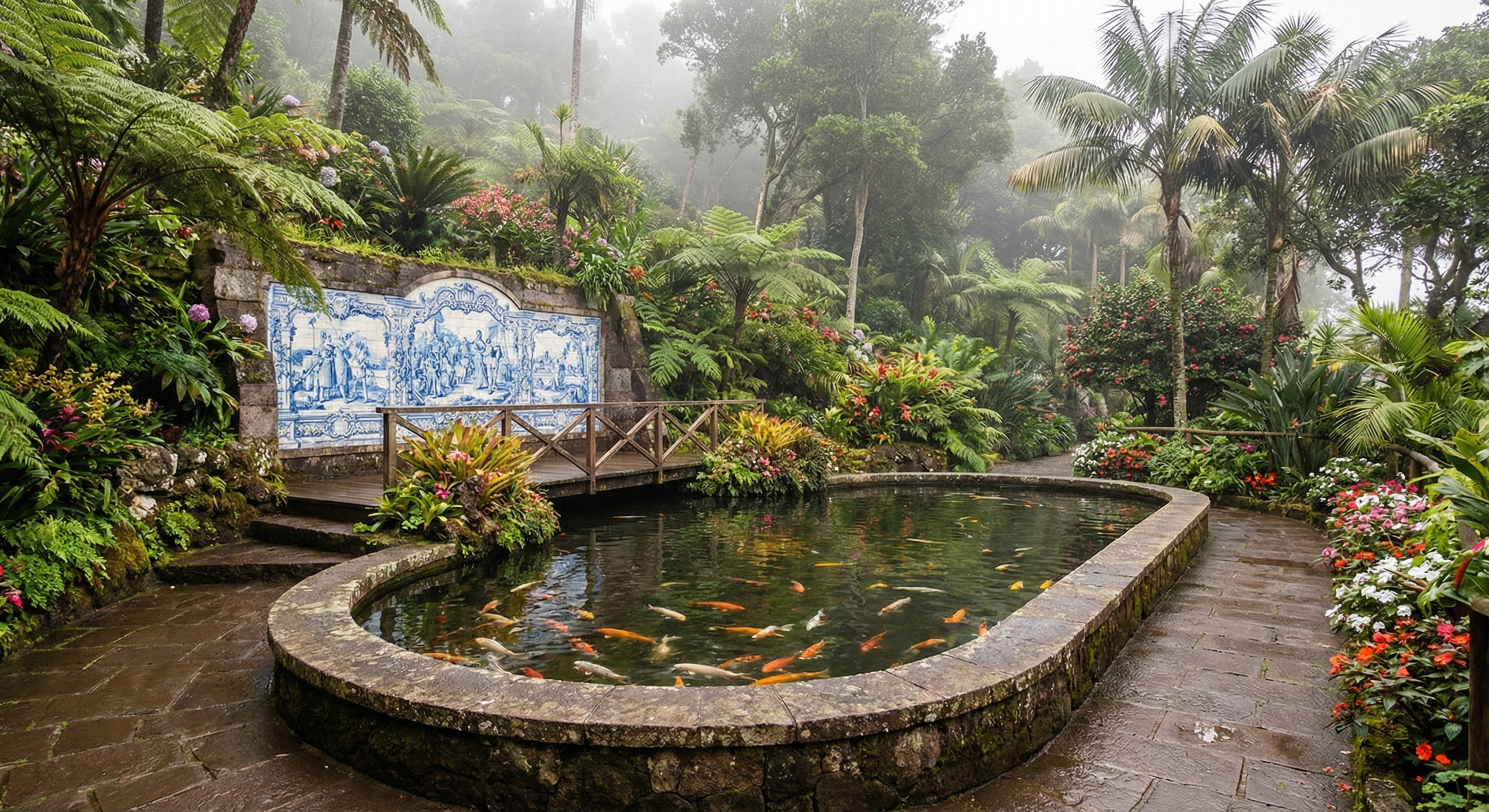
The Monte Palace Tropical Garden is one of the finest gardens in Europe — 70,000 square metres of exotic plants from five continents, spectacular azulejo tile panels illustrating Portuguese history, koi ponds, and extraordinary hilltop views over Funchal and the Atlantic.
The garden also houses a remarkable museum of African art and minerals, a koi pond with fish that are centuries old, and traditional azulejo (Portuguese tile) panels depicting the island's history. Entry costs €12.50. Allow at least two hours. The garden is best reached by cable car from the harbour — the experience of ascending through the hillside above Funchal is itself worth the trip.
Cable Car & Monte Toboggan
The cable car (teleférico) from the Zona Velha waterfront to Monte is one of Funchal's signature experiences — a 15-minute ascent in a six-person gondola through the hillside gardens above the city. The views of the harbour and bay below are excellent. One-way costs €15; return is €22.
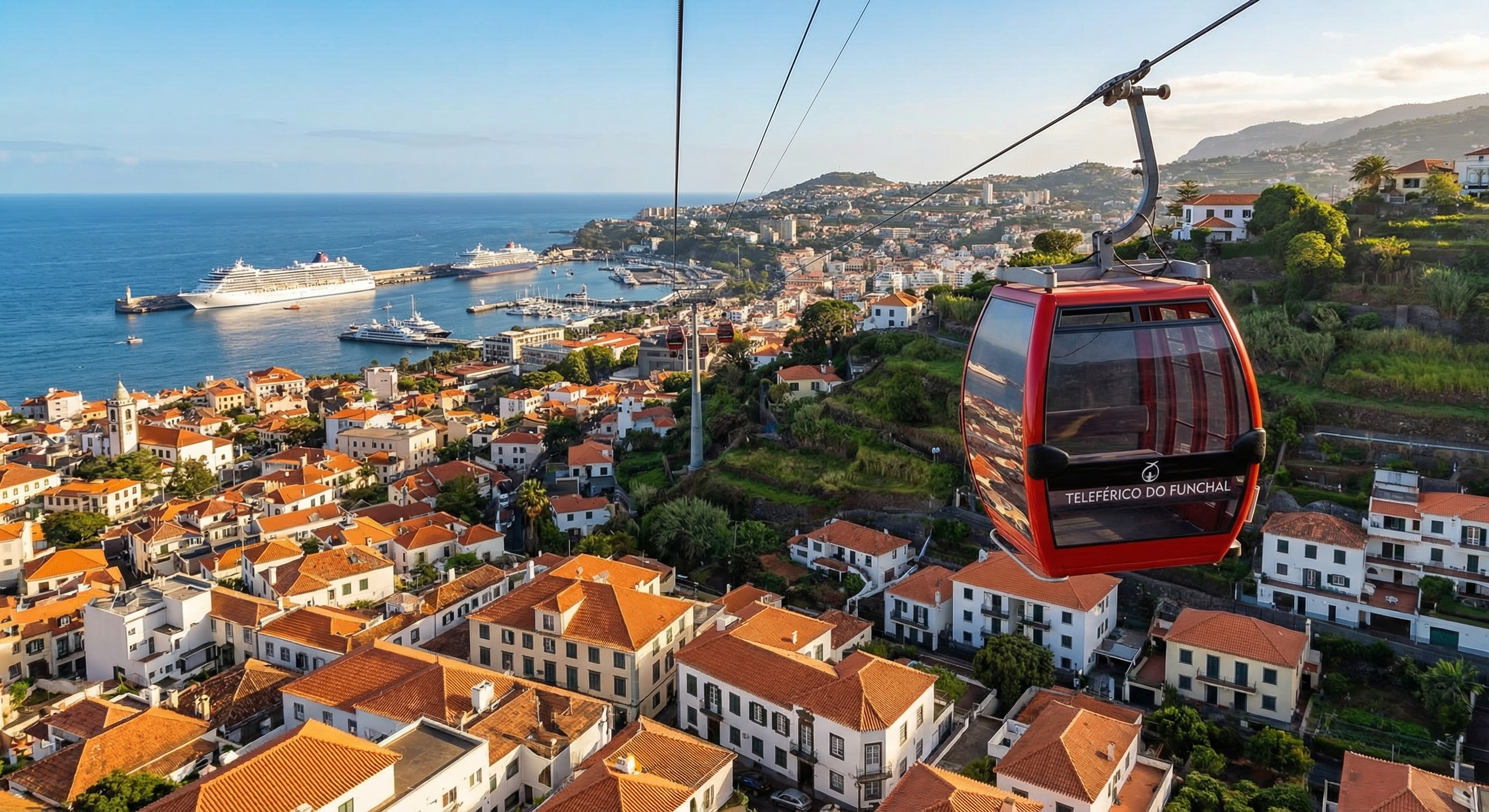
The Funchal cable car rises 1,600 metres above the city, offering a bird's-eye view of the harbour, the red-roofed old town, and the green hills behind. The 15-minute ride is one of the most dramatic urban cable car journeys in Europe. From the top, the traditional wicker toboggan ride down is half adrenaline, half absurdist comedy.
The Monte toboggan (carreiros do Monte) is the way back down — a traditional wicker sled pushed by two men in white suits and straw hats, sliding down 2km of steep cobblestone streets at up to 48km/h. It was developed in the 1850s as a practical transport method for residents of the steep hillsides — now it's a tourist experience, but a genuinely fun one. Costs €30 for two passengers, or €16 per person if you pair up with strangers.
CR7 Museum
Cristiano Ronaldo was born in Funchal in 1985 — a fact the city celebrates with characteristic restraint (read: maximum enthusiasm). The CR7 Museum on the harbour front displays his four Ballon d'Or trophies, World Player of the Year awards, Champions League medals, and an extraordinary collection of personal memorabilia. It's genuinely impressive even for non-football fans — the scale of his achievement, presented in one room, is remarkable. Entry costs €7. The outside has a bronze statue of Ronaldo (with an unexpectedly optimistic expression) that's one of the most-photographed things in Madeira.
Poncha Bars & Funchal Nightlife
Poncha is Madeira's traditional drink — aguardente (sugar cane spirit) mixed with honey, lemon, and orange juice — and the traditional poncha bars of Funchal's old town are among the best drinking spots in the Atlantic. Each bar has its own house recipe, mixed to order in a long wooden pestle-and-mortar vessel (the caneca).
The best traditional poncha bars are in and around the Zona Velha — look for places with hand-written menus, loud conversation in Portuguese, and local regulars at the bar. O Calhau on Rua de Santa Maria and several unnamed family-run bars in the side streets are worth finding. Poncha costs €2–4 per glass. Two or three is plenty — it's stronger than it tastes.
Book a Funchal City Tour or Food Tour
A local guide will show you the hidden Funchal — the backyards, the local restaurants, and the history behind the painted doors. Browse top-rated Funchal tours on GetYourGuide.
Browse Funchal ToursadDay Trips from Funchal
Câmara de Lobos — 20 minutes west
The most photogenic fishing village in Madeira — and the place Winston Churchill came to paint in 1950. The harbour is surrounded by brightly-coloured fishing boats, the cliffs above are among the steepest on the island, and the local restaurant strip along the harbour is excellent value. Famous for its poncha variation (fisherman's poncha — stronger and more austere than the Funchal version) and its fresh espetada.
Cabo Girão — 30 minutes west
The world's second-highest sea cliff at 580m above the Atlantic, with a glass-floored skywalk platform over the edge. Combine with Câmara de Lobos for a half-day western loop.
Pico do Arieiro — 45 minutes north
Drive up to Madeira's third-highest peak for the most dramatic landscape on the island — an above-the-clouds mountain world that bears no resemblance to the subtropical city below. For sunrise, you're looking at a 5am departure from Funchal.


